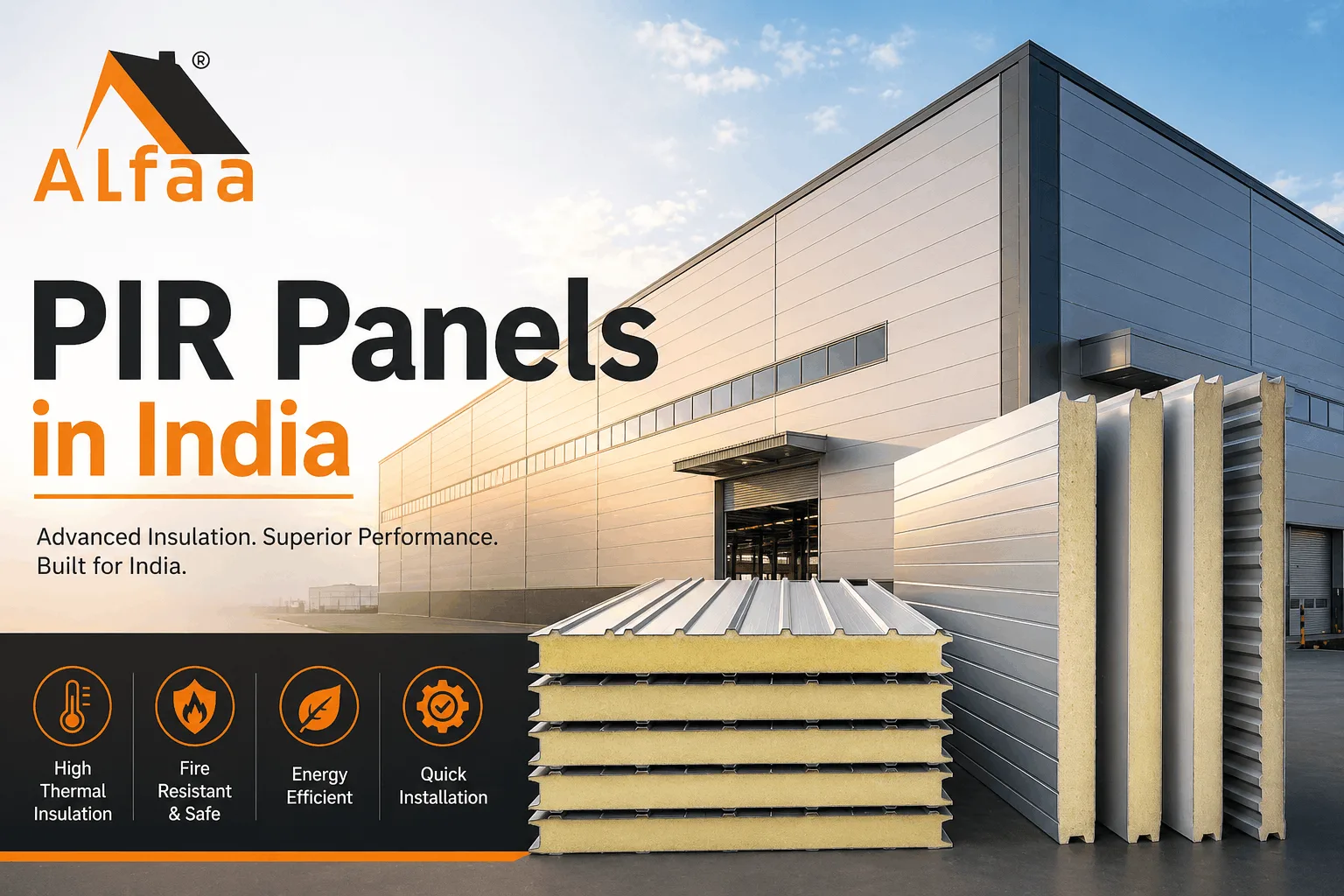
If you’re working in construction, cold storage, or industrial infrastructure, chances are you’ve come across PIR Panels—and for good reason. As India pushes toward energy efficiency, building safety, and faster construction cycles, polyisocyanurate (PIR) technology is quietly becoming a preferred choice.
But what exactly makes PIR Roof panels stand out? And how do you choose the right manufacturer in a crowded market?
Let’s break it down in a way that actually helps you make decisions—not just skim specs.
What Are PIR Panels?
PIR (Polyisocyanurate) panels are advanced insulation panels made by modifying polyurethane chemistry to improve and thermal performance.
In simple terms:
- PIR = upgraded version of PUR (polyurethane)
- Better fire behavior
- Higher temperature resistance
- Improved structural integrity
They are widely used as:
- Sandwich panels (with PPGI/metal sheets)
- PIR insulation boards
- Roofing, wall cladding, and cold room solutions
Why PIR Panels Are Gaining Momentum in India
India’s climate and regulatory landscape demand materials that can:
- Handle extreme heat
- Reduce energy consumption
- Meet building code requirements
This is exactly where PIR excels.
Key advantages:
- Lower thermal conductivity (better insulation)
- Better fire behaviour than PUR
- Good dimensional stability
- Lightweight and fast to install
Fire Behaviour Compared with PUR
Let’s address the biggest reason PIR panels are replacing traditional insulation — better fire behaviour than PUR.
How PIR behaves in fire:
- Forms a char layer when exposed to flame
- Better fire behaviour than PUR
- Keeps its shape longer than PUR
- Good dimensional stability
What to check:
- Fire test report for the exact panel
- Classification required by your project
- Ask the manufacturer for evidence
In high-risk environments like:
- Warehouses
- Pharma units
- Food processing plants
PIR is increasingly specified.
Technical Specifications of PIR Panels
While specs vary across PIR panel manufacturers, here’s what you should expect:
Core Properties:
- Density: 35–45 kg/m³
- Thermal conductivity: ~0.022–0.026 W/mK
- Operating temperature: -40°C to +120°C
Panel Thickness:
- 30 mm to 150 mm (or more for cold storage)
Facing Materials:
- PPGI (pre-painted galvanized iron)
- Stainless steel (for hygiene zones)
- Aluminum (for specialized environments)
Joint Systems:
- Tongue & groove
- Cam-lock systems (for cold rooms)
PIR Insulation Board vs PIR Panels
Many people confuse the two—here’s the difference:
| Feature | PIR Panels | PIR Insulation Board |
|---|---|---|
| Structure | Sandwich panel | Solid board |
| Use | Walls, roofs | Internal insulation |
| Installation | Modular | Layer-based |
| Strength | High | Medium |
PIR insulation boards are often used inside walls, while PIR Wall Panels serve as full structural elements.
Applications of PIR Panels in India
PIR is not limited to one industry—it’s everywhere.
- Cold Storage & Refrigeration
- Temperature-sensitive storage
- Minimal thermal loss
- Energy cost savings
- Industrial Buildings
- Factories
- Warehouses
- Logistics hubs
- Clean Rooms & Pharma Units
- Hygienic surfaces
- Cleanroom compatibility
- Commercial Construction
- Office buildings
- Data centers
- Airports ,etc..
- Food Processing Units
- Moisture resistance
- Easy-to-clean surfaces
Choosing the Right PIR Panel Manufacturers
Not all PIR manufacturers are equal. The difference shows up in:
- Test reports
- Panel consistency
- Installation support
- Longevity
What to look for:
- Proven track record
- Certified testing reports
- Customization capability
- After-sales support
This is where brands like AlfaaPanels bring a unique edge—focusing not just on supply, but on application-driven solutions tailored for Indian conditions.
What Makes AlfaaPanels Different From Others ?
Instead of treating PIR as just another product, AlfaaPanels approaches it as a complete system:
- Engineered for Indian climate extremes
- Designed with performance as a priority
- Focus on long-term performance, not just initial cost
- Strong presence in industrial and cold chain sectors
Their approach blends material science + real-world usage, which is often missing in generic suppliers.
Future of PIR Insulation in India
With increasing focus on:
- Green building standards
- Energy conservation
- Building safety regulations
The demand for PIR insulation manufacturers is only going to rise.
Expect growth in:
- Prefabricated buildings
- Cold chain logistics
- Data infrastructure
Final Thoughts :
PIR panels are no longer just an alternative—they’re quickly becoming the industry standard for insulation in India.
If your project demands:
- Energy efficiency
- Long-term durability
Then choosing the right partner—like AlfaaPanels—can make all the difference between a structure that performs and one that struggles.
FAQs
- What is the difference between PIR and PUR panels?
PIR panels offer better and thermal stability compared to PUR panels due to modified chemical structure.
- Are PIR panels fireproof?
No insulation panel is fireproof. PIR performs better in fire than PUR/PUF, but always check the test report for the specific product.
- Where are PIR panels commonly used in India?
They are widely used in cold storage, warehouses, pharma units, and industrial buildings.
- What is the lifespan of PIR panels?
With proper installation, PIR panels can last 20–30 years or more.
- Are PIR panels energy efficient?
Yes, they significantly reduce heat transfer, leading to lower electricity costs.
- How do I choose the best PIR panel manufacturer?
Look for:
- Certifications
- Project experience
- Product consistency
- Support services
- Is PIR insulation eco-friendly?
PIR panels contribute to energy efficiency, which indirectly reduces carbon footprint.